Questions about abortion
← Back
What Does Mexico’s Regulatory Framework on Abortion Address?
To guarantee freely accessible, safe, and free-of-charge access to abortion, this service must be incorporated into health regulations. It is also necessary to create public policies that ensure access to abortion (such as Mexico City’s Legal Termination of Pregnancy Program, Guerrero’s State Safe Abortion Program, the Legal Abortion Protocol in Jalisco, the Decree Establishing Safe Abortion Services in Public Institutions of the State Health System in Michoacán de Ocampo, the General Guidelines for the Organization and Operation of Pregnancy Termination Services in Oaxaca, and the Safe Abortion Program for the State of Veracruz), as well as to fully decriminalize abortion within the criminal law framework.
GIRE has designed a regulatory traffic light for abortion in Mexico—a quantitative tool that makes it possible to evaluate abortion-related regulations in the 32 federal entities and at the federal level. The traffic light identifies whether there are public policies on voluntary abortion, reforms to health regulations, and whether abortion has been decriminalized in each criminal code (that is, whether there are penalties for people who have abortions or for health care personnel who assist with or perform the procedure). Additionally, it considers whether criminal codes include grounds for exemption from criminal liability or non-punishability that facilitate access to abortion services. In other words, this evaluation does not include considerations related to the accessibility or availability of abortion services in each case.
Regulatory Traffic Light for Abortion in Mexico
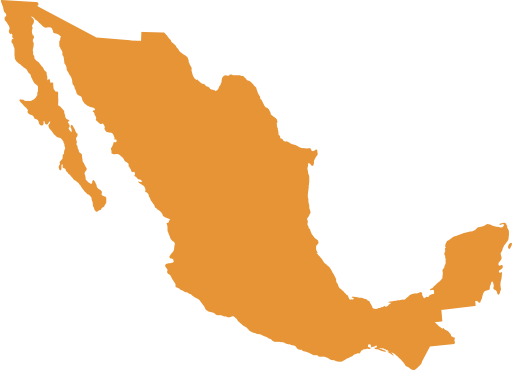
To assign the federal score and the scores for Coahuila, Nayarit, Zacatecas, and Yucatán, rulings issued by both the Supreme Court of Justice of the Nation (SCJN) and the collegiate courts in each state were taken into account.
Map: Created by GIRE. Source: Legislative review as of April 30, 2026.
When analyzing the aspects mentioned above, it is noteworthy that Michoacán has the least restrictive regulatory framework, as abortion is decriminalized in that state with no limit on the number of weeks of gestation for service users. In addition, Michoacán has a state Health Law that guarantees abortion services and a state program for the provision of safe abortion care. Likewise, the state does not impose any prison sentences or professional license suspensions on those who provide the service, although it does contemplate community service as a penalty.
Guerrero, Coahuila, Chihuahua, Tlaxcala, Baja California Sur, Colima, Sinaloa, Mexico City, and Oaxaca follow in terms of less restrictiveness in their regulatory frameworks.
In Guerrero, service users cannot be penalized; however, prison sentences (ranging from six months to two years) are stipulated for those who assist with the procedure. Nevertheless, the state has the most rights-oriented state health law for the provision of abortion services. In Coahuila, Chihuahua, and Tlaxcala neither users of the service nor those who assist them can be penalized for having or performing an abortion (regardless of gestational age) but there has been no reform of the Health Law or public policy to regulate the provision of the service.
In Baja California Sur, Mexico City, and Colima, abortion is decriminalized up to 12.6 weeks of pregnancy; in the case of Sinaloa, abortion is decriminalized up to 13.6 weeks. After this period, these entities’ criminal codes establish grounds for accessing abortion (for example, requiring that it be performed in cases where an authority has unjustifiably denied the service, as is the case in Baja California Sur and Colima). Moreover, these states reformed their health laws to include Legal Termination of Pregnancy as a health service. Baja California Sur receives the highest score among the four, as it eliminated custodial sentences (imprisonment) and professional license suspension from its Criminal Code for personnel who assist abortion procedures in the state. Mexico City and Oaxaca tie for eighth place because, in addition to reforming their health laws, they have issued a public program that regulates the provision of abortion.[3] It is important to emphasize that, in order to have access to safe, quality abortion, total decriminalization must be paired with public health policy.
By contrast, Sonora is the federal entity with the most restrictive regulatory framework in Mexico as of the date this document was last updated. In addition to enforcing the criminalization of abortion without exception, it does not include health-related grounds or grounds based on denial of services by authorities. Likewise, the maximum prison sentence established in its Criminal Code for women and other pregnant people who terminate their pregnancies without meeting the conditions set forth in state regulations is the highest in the country: six years.